
2026 Public Power Candidate Scorecard
Ward 2 Candidates
Overall Score

Sandy Aldrich: F
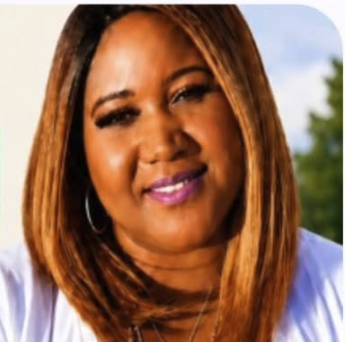
Teesha Montague:
No response
1. Independence from DTE and Private Utility-Affiliated Money
Has the candidate ever accepted contributions from DTE Energy, DTE-affiliated PACs, or known utility front groups?
No, and the candidate has made a public commitment not to accept such contributions in the future
No, the candidate has not accepted such contributions
Yes, but contributions were returned or publicly disavowed
Yes, contributions were accepted and retained
Sandy Aldrich | B
No, the candidate has not accepted such contributions
I have not and do not intend to take money from any utility-affiliates. This includes their executives and their lobbyists.
Teesha Montague | No response.
2. Public Commitment to Municipal / Public Power
Has the candidate publicly stated support for municipalization in Ann Arbor?
Yes. The candidate has made public statements, written op-eds, or made social media posts supporting public power.
Yes. The candidate's platform includes public power and utility accountability.
No.
Sandy Aldrich | F
No.
I am running for council not because I am an expert on every local issue, but because I am invested in the future of this city. I have not spoken out on this issue. I intend to approach all issues with an open mind and look forward to learning and listening.
Teesha Montague | No response.
3. Public Commitment to 2026 Ann Arbor Public Power Ballot Initiative
Has the candidate publicly expressed support for placing or advancing a public power ballot initiative in Ann Arbor?
Yes. The candidate has made public statements, written op-eds, or made social media posts supporting the 2026 Ann Arbor for Public Power ballot initiative.
Yes. The candidate’s platform includes public power and utility accountability, generally.
No.
Sandy Aldrich | F
No.
I am not endorsing any individuals or initiatives this cycle and will be focused on running my own campaign. Once in office, I look forward to working with community members on a variety of issues.
Teesha Montague | No response.
4. Track Record on Energy Justice, Affordability, and Reliability
In their past votes, advocacy, or community work, has the candidate actively supported policies that advance:
Energy affordability
Protection against electricity shutoffs
Grid reliability
Energy equity for low-income residents
Reforms that limit the role of investor-owned utility money in elections and policymaking
Ann Arbor’s stated A2Zero goal to achieve community-wide carbon neutrality by 2030
None of the above
Note: Due to an inability to thoroughly research every candidate’s track record, the scores for question 4 are omitted. Candidate responses are still provided.
Sandy Aldrich
None of the above
As a community, we must continuously work together to ensure basic needs like electricity are reliable and affordable.
Teesha Montague | No response.
5. Track Record on Data Centers
Does the candidate publicly endorse a moratorium on large-scale data centers and/or has the candidate actively supported policies to stop the construction of such data centers in their past votes, advocacy, or community work?
Yes. The candidate has made public statements, written op-eds, or made social media posts supporting a data center moratorium.
Yes. The candidate’s platform includes a moratorium on data centers.
Yes. The candidate has actively supported such policies
Mixed. Some advocacy or policy work has been against data centers and some has been in favor.
No.
Sandy Aldrich | F
No.
I have no public track record on data centers, but there is no doubt about community concerns around massive resource demands, including severe power grid strain, hidden water consumption for cooling, and minimal long-term job creation relative to facility size. There are many unknowns and mistrust. However, if we (US, Michigan, Ann Arbor) do not wrap our arms around this industry to build best practices to guide it into a movement with a conscience, who will? They are already pushing into developing nations and emerging markets that won’t have that privilege.
Instead, how might we envision data centers differently, not only for Ann Arbor but also for Michigan and globally? Ann Arbor has the potential to be the destination for sustainable and equitable computing with our significant brain trust, high sustainability values and innovation-focused culture. Instead of a hard no, can we reframe it as a "how might we?"